

Insulation R-value explained: it’s one of those terms that comes up constantly when you’re talking to contractors or shopping for insulation R-value Virginia Beach improvements, but most homeowners aren’t totally sure what it means, why it matters, or what number they’re actually supposed to have.
Here’s the plain-English version, along with what R-value means specifically for homes right here in Hampton Roads.
What Is R-Value?
R-value measures how well a material resists heat flow. The “R” stands for thermal resistance. The higher the number, the better the insulation is at slowing heat transfer between the inside and outside of your home.
Think of it like a winter coat. A thin windbreaker has a low R-value, and wind and cold cut right through it. A heavy down parka has a high one, trapping warmth and keeping the cold out. Your attic insulation works the same way. A higher R-value means it takes significantly more time and energy for heat to move through the material. For a region like Hampton Roads, where your HVAC runs hard in both summer and winter, that resistance translates directly into lower energy bills and a more comfortable home year-round.
Insulation R-Value for Virginia Beach Homes: What the DOE Recommends
Virginia Beach and the surrounding 757 area fall in Climate Zone 3. That means hot, humid summers and cool winter nights, and sometimes both within the same week during the shoulder seasons.
This matters because the U.S. Department of Energy sets R-value recommendations by climate zone. For attics in Zone 3, the recommended insulation R-value is R-38 to R-60. Many older Hampton Roads homes fall well short of that range, especially if the insulation hasn’t been updated in 15 or 20 years. An attic sitting at R-19 or R-25 (common in homes built during the 1980s and 1990s) is losing heat all winter and absorbing it all summer. You feel that in your energy bills and in how your home actually feels day to day.
R-Value Guidelines by Area of the Home
Here’s a quick breakdown of recommended R-values for Climate Zone 3:
- Attic: R-38 to R-60
- Exterior walls (new construction): R-13 to R-15
- Crawl space walls: R-13 to R-19
- Crawl space ceiling: R-25 to R-30
For your crawl space insulation Virginia Beach specifically, the right approach depends on whether it’s conditioned or unconditioned, vented or sealed, and that affects what R-value is actually appropriate. When in doubt, a professional assessment takes the guesswork out of it.
How to Estimate Your Current R-Value
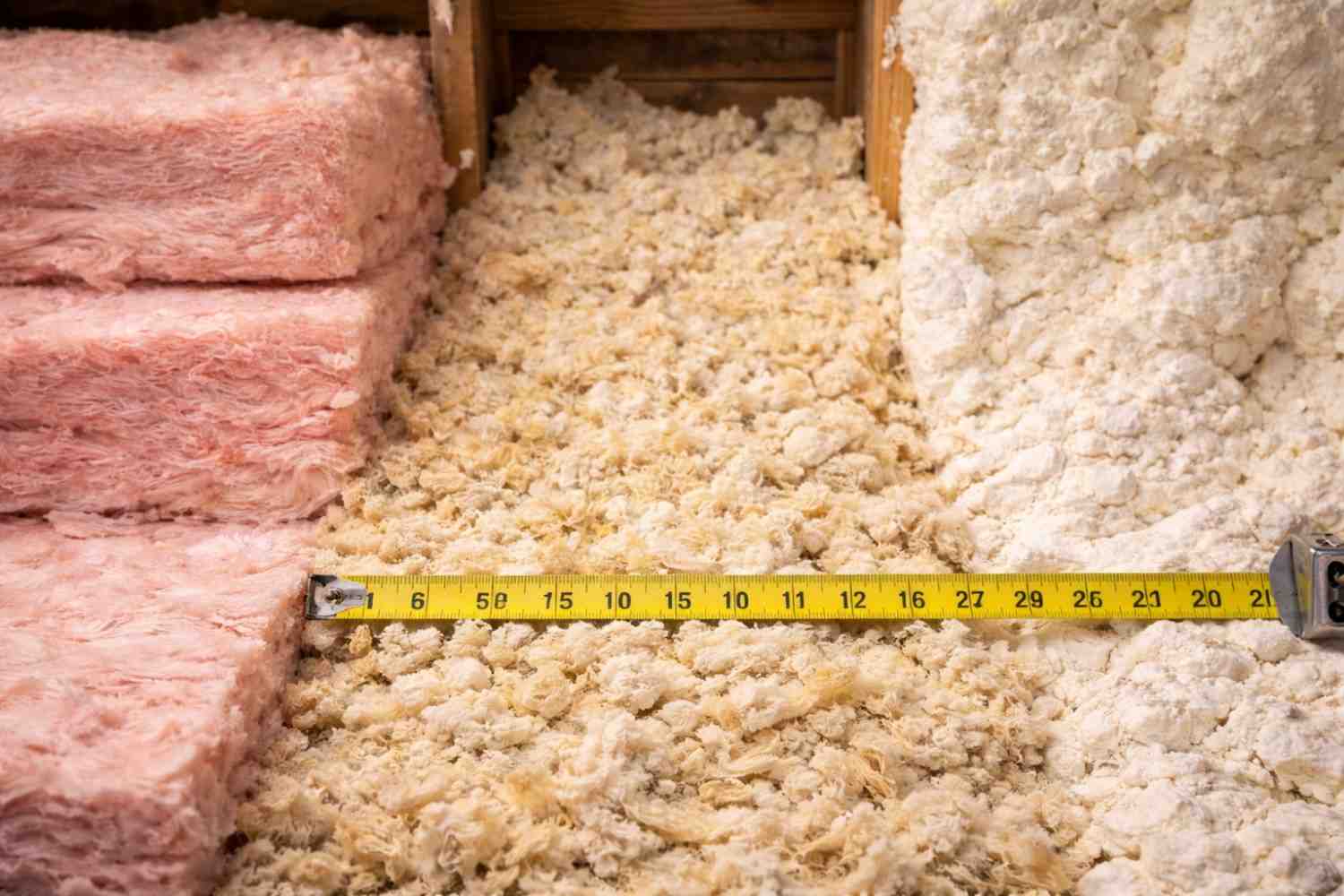
You can get a rough idea of where you stand by measuring the depth of your existing attic insulation, then multiplying by the R-value per inch for that material type:
- Fiberglass batts: ~R-3.1 per inch
- Blown fiberglass: ~R-2.2 per inch
- Blown cellulose: ~R-3.5 per inch
- Open-cell spray foam: ~R-3.7 per inch
- Closed-cell spray foam: ~R-6.5 per inch
Example: if you have 6 inches of blown fiberglass, you’re sitting around R-13. The DOE recommends R-38 to R-60 for attics in our area. That gap is costing you money every single month.
Why R-Value Alone Does Not Tell the Whole Story
Here’s something a lot of contractors skip over: R-value only measures resistance to heat conduction. It doesn’t account for air movement, and that’s where a lot of homes lose the battle.
If your attic has air leaks around recessed lights, HVAC ducts, or plumbing penetrations, warm or cool air is passing through your building envelope regardless of your insulation’s R-value. You can have R-60 insulation and still lose significant energy because air bypasses it entirely through gaps and cracks. That’s why we always pair insulation with mechanical air sealing, using thermal imaging to locate hidden leaks before a single inch of new material goes in.
Does More R-Value Always Mean Better?
Not necessarily. There’s a point of diminishing returns. Going from R-11 to R-30 in an attic makes a dramatic difference. Going from R-49 to R-60 is a much smaller gain. The goal isn’t to max out the number. It’s to reach the DOE-recommended range for your climate zone and close any air leaks that are working against you.
What the right R-value looks like in practice depends on your home’s current condition, what material is already up there, and whether there are air sealing issues to address first. Every home in Hampton Roads is a little different, and a one-size-fits-all recommendation usually leaves money on the table.
Getting the Right R-Value for Your Home
If you’re unsure what you currently have, or whether it’s enough, our team can help. We serve homeowners in Virginia Beach, insulation company in Suffolk, Chesapeake, Norfolk, and throughout the Hampton Roads region. Our process starts with thermal imaging to see exactly where insulation is falling short and where air leaks are hiding. Schedule your free attic assessment today.
Frequently Asked Questions
What R-value do I need for my attic in Virginia Beach?
The DOE recommends R-38 to R-60 for attics in Climate Zone 3, which covers Virginia Beach and all of Hampton Roads. If your current insulation doesn’t hit that range, you’re likely losing energy year-round.
Is a higher R-value always better?
Higher is better up to the recommended range for your climate. Beyond that, returns diminish. The goal is to hit the DOE range and address air leaks, because both matter for real-world energy performance.
Does R-value apply to crawl space insulation too?
Yes. For Hampton Roads, R-13 to R-19 is typically recommended for crawl space walls and R-25 to R-30 for the crawl space ceiling, depending on whether the space is conditioned or vented.
Can I check my R-value myself?
You can get a rough estimate by measuring insulation depth and multiplying by the per-inch R-value for your material type. For a complete picture, including air leaks, a thermal imaging inspection is far more accurate.
How do I know if my insulation is still effective?
Signs of failing insulation include rising energy bills, rooms that won’t hold temperature, and visible compression or moisture damage in the attic. When in doubt, have a professional assess it.