

Most homeowners who ask about spray foam aren’t comparing it to nothing. They’re comparing it to fiberglass or cellulose, and the price difference catches them off guard. Spray foam costs more upfront. That’s just the truth. The question is whether the extra money makes sense for your house.
This post is the cost piece of the spray foam conversation. If you want the full service rundown, our spray foam insulation Virginia Beach service page covers what we install and how. Here we’ll get specific about pricing: what drives it, how open cell compares to closed cell, and what to expect for different project types. The team at Level Home Pros Virginia Beach handles spray foam installs across Hampton Roads. For your house specifically, call 757-834-2059.
Why Spray Foam Costs More Than Other Insulation
Spray foam is a different product than fiberglass or cellulose. It expands on application, fills every gap, bonds to surfaces, and air-seals as it cures. Each of those steps has a cost. The chemicals are more expensive than rolls of pink. The equipment is specialized. Trained applicators are required. And the installer carries more liability because spray foam done wrong can cause real problems.
What you’re paying for is performance per square foot. A few inches of closed cell spray foam delivers the R-value of a much thicker layer of fiberglass while sealing the air leaks at the same time. For some applications, that’s the right call. For others, it isn’t.
Open Cell vs Closed Cell: The Cost Difference
Open Cell Pricing and Best Uses
Open cell spray foam is the lighter, less expensive option. It expands more, fills cavities easily, and provides about R-3.5 to R-3.6 per inch. It’s not a moisture barrier, which makes it a poor choice for crawl spaces or below-grade applications. Where it works well: unconditioned attics, interior wall cavities for sound dampening, and places where the budget matters more than maximum R-value per inch.
Closed Cell Pricing and Best Uses
Closed cell is denser, costs more, and delivers significantly higher performance. Roughly R-6 to R-6.5 per inch and acts as both insulation and a moisture barrier. In Hampton Roads, closed cell is the right pick for crawl spaces, rim joists, and any application where moisture is a factor. It’s also what we typically recommend for unvented roof assemblies. The price reflects what it does.
Spray Foam Cost per Square Foot in Virginia Beach
We don’t post flat per-square-foot prices on a blog because the number varies too much by application. Open cell at 5 inches of attic install costs different than closed cell at 2 inches in a rim joist. Even within one product, prices shift with chemical costs, labor on the specific job, and what prep is needed. What we can tell you is that a typical Hampton Roads attic spray foam project runs in the thousands, not hundreds. We give written quotes after looking at the job. No estimates over the phone for spray foam. The variables matter too much.
Spray Foam Cost by Project Type
Attic Spray Foam
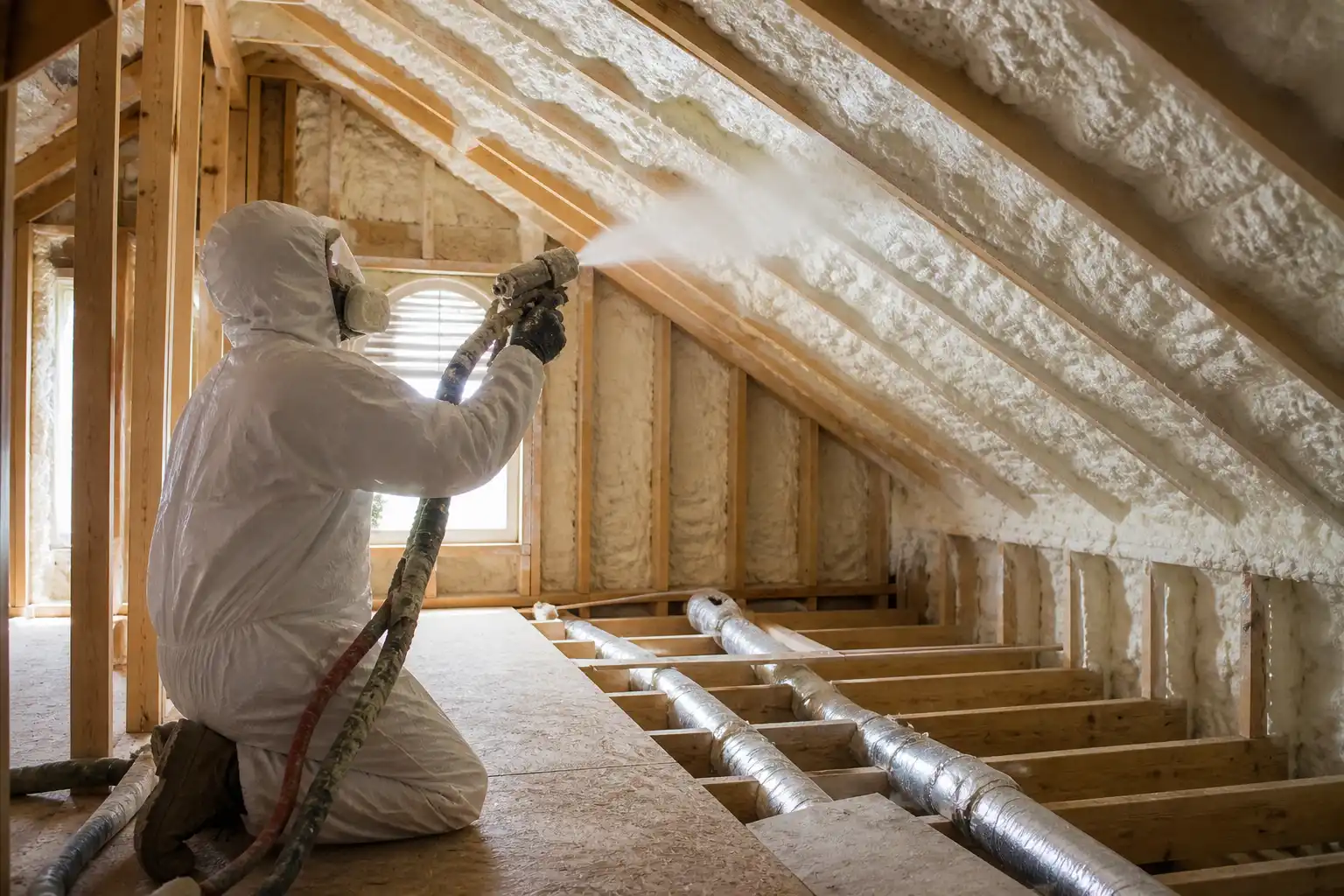
Open cell on the attic floor (when there’s an unconditioned attic above) or closed cell at the roof deck (when you want to bring the attic into the conditioned space). Roof deck installs run higher because they need closed cell and more inches to hit code. Attic floor installs are cheaper, but only work if you’re not using the attic.
Crawl Space Spray Foam
Closed cell almost always. We spray it on rim joists, on the underside of the floor, and sometimes on foundation walls depending on the encapsulation strategy. The moisture barrier benefit is the whole reason closed cell is the right material here. Don’t let anyone sell you open cell for a crawl space in Virginia Beach.
Wall Cavity Spray Foam
Open or closed cell into open wall cavities during renovation or new construction. Closed cell delivers higher R-value and adds racking strength. Open cell is more affordable and easier to trim. The right call depends on what the wall is doing and your budget.
Rim Joist Spray Foam
The rim joist (the band of framing where your floor system meets the foundation) is one of the highest-leak points in most homes. A few inches of closed cell here pays back fast. It’s a small square footage but a major air sealing win.
What Affects the Final Quote
Foam Thickness Required
More inches mean more material. R-49 in an attic with closed cell at R-6.5 per inch is about 7.5 inches of foam. With open cell at R-3.5 per inch, you’d need 14 inches. Thickness drives material cost more than anything else.
Existing Insulation Removal
Spray foam needs a clean surface to bond to. If your attic has old fiberglass batts or settled cellulose, that material has to come out first. Removal adds time and disposal cost.
Access and Prep Work
Tight crawl spaces, finished attic conversions, knee walls, and complex framing all increase labor. Prep work like masking, protecting fixtures, and ventilation setup all factors in. Easy access keeps prices down.
Is Spray Foam Worth the Higher Cost?
For some homes, absolutely. The energy savings, comfort improvement, and moisture control add up over the years. For other homes, blown-in cellulose with thorough air sealing gets most of the way there for less money. The U.S. Department of Energy reference on insulation types is a solid starting point if you want to compare options. We’ll be honest about your house when we walk through it. If spray foam isn’t the right answer, we’ll tell you what is.
Frequently Asked Questions
How much does spray foam insulation cost per square foot in Virginia Beach?
Pricing varies by foam type, thickness, and project conditions. Closed cell costs more per square foot than open cell. Thicker installs cost more than thinner ones. We don’t quote flat per-square-foot rates on the phone because the number depends too much on the specific job. Call 757-834-2059 for a written quote.
Is open cell or closed cell spray foam cheaper?
Open cell is cheaper per square foot. Closed cell is denser, harder to apply, and uses more material per inch of thickness, all of which raises the price. Open cell isn’t always the better deal though, since closed cell delivers about double the R-value per inch and acts as a moisture barrier.
How much does it cost to spray foam an attic in Hampton Roads?
Attic spray foam projects in this market typically run in the thousands. Final cost depends on attic size, whether you’re foaming the floor or the roof deck, foam type, thickness needed, and whether old insulation has to come out first. Call us for a real number on your attic.
Why is spray foam more expensive than fiberglass?
The chemicals cost more, the equipment is specialized, applicators need training, and the install includes air sealing that you’d pay for separately with fiberglass. The price difference reflects what spray foam actually does in one step.
Does spray foam pay for itself?
Often, yes, especially in attics and crawl spaces in Hampton Roads where energy losses are heavy. Payback varies based on your starting condition, energy use, and how long you’re staying in the home. We can talk through realistic timelines during your consultation, but we don’t make specific savings promises since every home is different.
Can spray foam be applied over existing insulation?
Generally no. Spray foam needs to bond to a clean surface, and bonding to fiberglass or cellulose doesn’t work well. Old insulation in poor shape should come out before spray foam goes in. If your existing insulation is in good condition and is right for the application, we’d often recommend air sealing and adding more of the same material instead of switching to foam.