

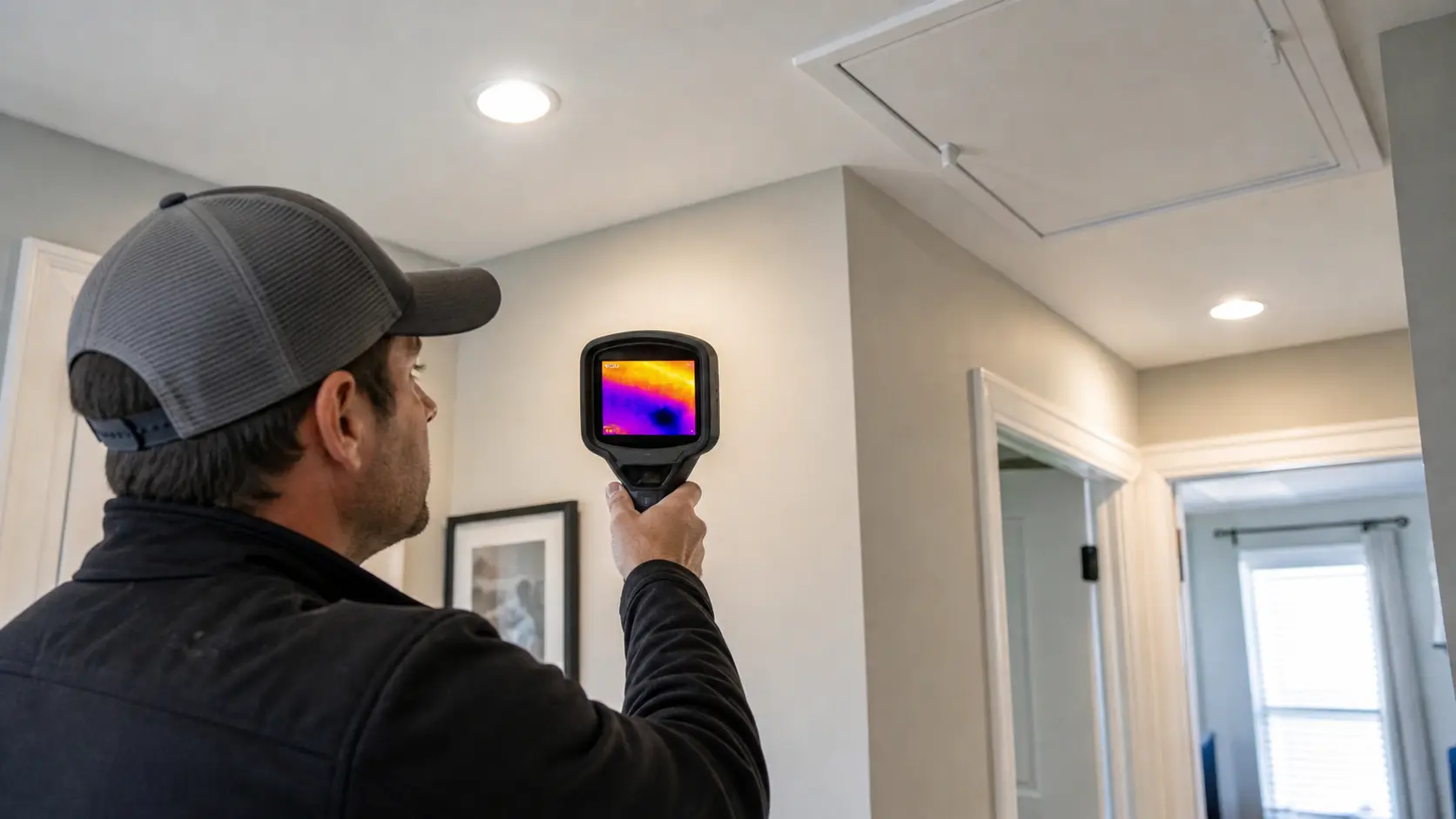
Walk through your house. You can’t see most of the reasons your energy bill is what it is. Insulation that’s settled to half its original depth. A wall cavity the builder forgot to fill. The gap around the recessed light in your kitchen ceiling. That gap pulls cool air into the attic 24/7. None of it shows from the outside. None of it shows on a flashlight inspection. Most of it shows up on thermal imaging.
This post is about what thermal imaging does. What it finds in Hampton Roads homes. And why we put it at the front of every Level Up Attic Restoration System job. The Level Home Pros insulation team uses thermal imaging on every assessment. Call 757-834-2059 to set yours up.
What Is Thermal Imaging in Home Energy Assessments?
Thermal imaging is also called infrared thermography. It uses a camera that sees heat instead of light. The camera reads the surface temperature of whatever it’s pointed at. Then it shows the differences as a color image. Warm spots show up bright. Cold spots show up dark. The differences across a wall, ceiling, or floor show where insulation works. And where it doesn’t.
It’s not a special-effects gadget. It’s a diagnostic tool. It turns invisible energy losses into a picture you can point at.
What an Infrared Camera Actually Sees
A thermal camera doesn’t see through walls. That’s a common myth. What it sees is the surface. The surface temperature is shaped by what’s behind it. A patch of drywall over missing insulation looks colder in winter and warmer in summer than the rest of the wall. Heat moves through that spot more easily.
The camera also picks up air leaks. If you’re losing cool or warm air through a gap, the surface near that gap takes on the temperature of the leaking air. We can pinpoint air leaks no other tool would catch.
The Hidden Problems Thermal Imaging Finds
Missing Insulation in Wall Cavities
More common than people think. Builders skip cavities. Old work crews replace drywall and don’t put the insulation back. Settling and rodent damage open up sections that used to be filled. Thermal imaging shows these gaps as cold or warm patches. The wall looks normal from the outside. The camera shows the truth.
Compressed or Settled Attic Insulation
Old blown-in insulation can settle to half its original depth over decades. From the floor below it looks the same. From above with a thermal camera, the thin spots glow.
Air Leaks Around Penetrations
Recessed lights. Plumbing chases. Attic hatches. Top plates of interior walls. These are the chronic air leak points in most Hampton Roads homes. Thermal imaging maps them all in a single pass.
Wet or Damaged Insulation
Wet insulation reads very different from dry insulation on a thermal scan. If your roof or ductwork has a leak, the thermal image catches it. That’s long before water damage shows up from below.
Why Hampton Roads Homes Show Specific Patterns
Older Brick Homes in Norfolk and Portsmouth
Pre-1960s brick homes in Norfolk and parts of Portsmouth often have small cavities. They also have spotty original insulation. Thermal imaging on these homes shows uneven coverage. It also shows heat loss through walls that were never insulated.
1980s-90s Construction Throughout Virginia Beach
Homes built in the 80s and 90s across Virginia Beach often had R-19 or R-30 attic insulation when new. Think the Kempsville and Holland Road areas. Forty years later that insulation has settled. In some cases to less than half its original R-value. Thermal imaging shows the patchy result clearly.
Coastal Humidity Effects
Our humidity makes the picture worse. Damp insulation doesn’t insulate. Thermal imaging catches damp spots. A visual check would miss them.
How Thermal Imaging Changes the Insulation Plan
Without thermal imaging, an insulation contractor is guessing where the problems are. They might be right. They might also add insulation where it’s not needed. And miss the spots that matter. With thermal imaging, the answer is specific. We can show you the exact zones leaking heat or losing cool air. The fix matches the actual problem.
This is why thermal imaging is the first step in our process. We don’t quote you a job until we’ve seen what your house is actually doing.
What to Expect During a Thermal Imaging Assessment
Plan on about an hour for a typical home. Bigger or more complex homes take longer. We walk through the house with the thermal camera. We document the findings as we go. You’ll see the images on the spot. We’ll talk through what each one means. After the visit, you get a written report. It includes the work we recommend and a quote.
Want a wider view of what a full energy audit looks like? Check the home energy audit guidance from the Department of Energy. Our scan focuses on insulation and air sealing. It pairs well with a full energy audit if you want both.
Frequently Asked Questions
What does thermal imaging show in a home energy assessment?
It shows surface temperature differences across walls, ceilings, and floors. Those differences point to missing insulation, settled or compressed insulation, air leaks at penetrations, and wet or damaged insulation. It’s a tool that turns hidden energy losses into a clear picture.
Is a thermal imaging inspection worth it?
For homes with comfort issues, high energy bills, or insulation more than 15 years old, almost always. The scan lets us pinpoint the real problems instead of guessing at a fix. That usually saves money on the work itself by focusing the budget where it matters.
How long does a thermal imaging assessment take?
About an hour for a typical Hampton Roads home. Bigger or more complex homes take longer. We walk every level, document what we find, and talk through the images as we go.
Can thermal imaging see through walls?
No. A thermal camera reads surface temperature only. What’s behind a wall affects the surface temperature of that wall. That’s how the camera reveals hidden problems. The camera itself never sees past the surface.
Do I need a thermal imaging scan before adding insulation?
We recommend it for any non-trivial insulation project. Without it, you’re guessing where the real problems are. The scan tells us if you have missing insulation, air leaks, moisture issues, or all three. Each one needs a different fix.
How accurate is infrared thermography for finding insulation gaps?
Very accurate when the conditions are right. The best results come when there’s a real temperature gap between inside and outside the home. We schedule scans on cool mornings or hot afternoons. That’s when the contrast is strongest. Mid-day in spring or fall isn’t the best time for clean readings.